
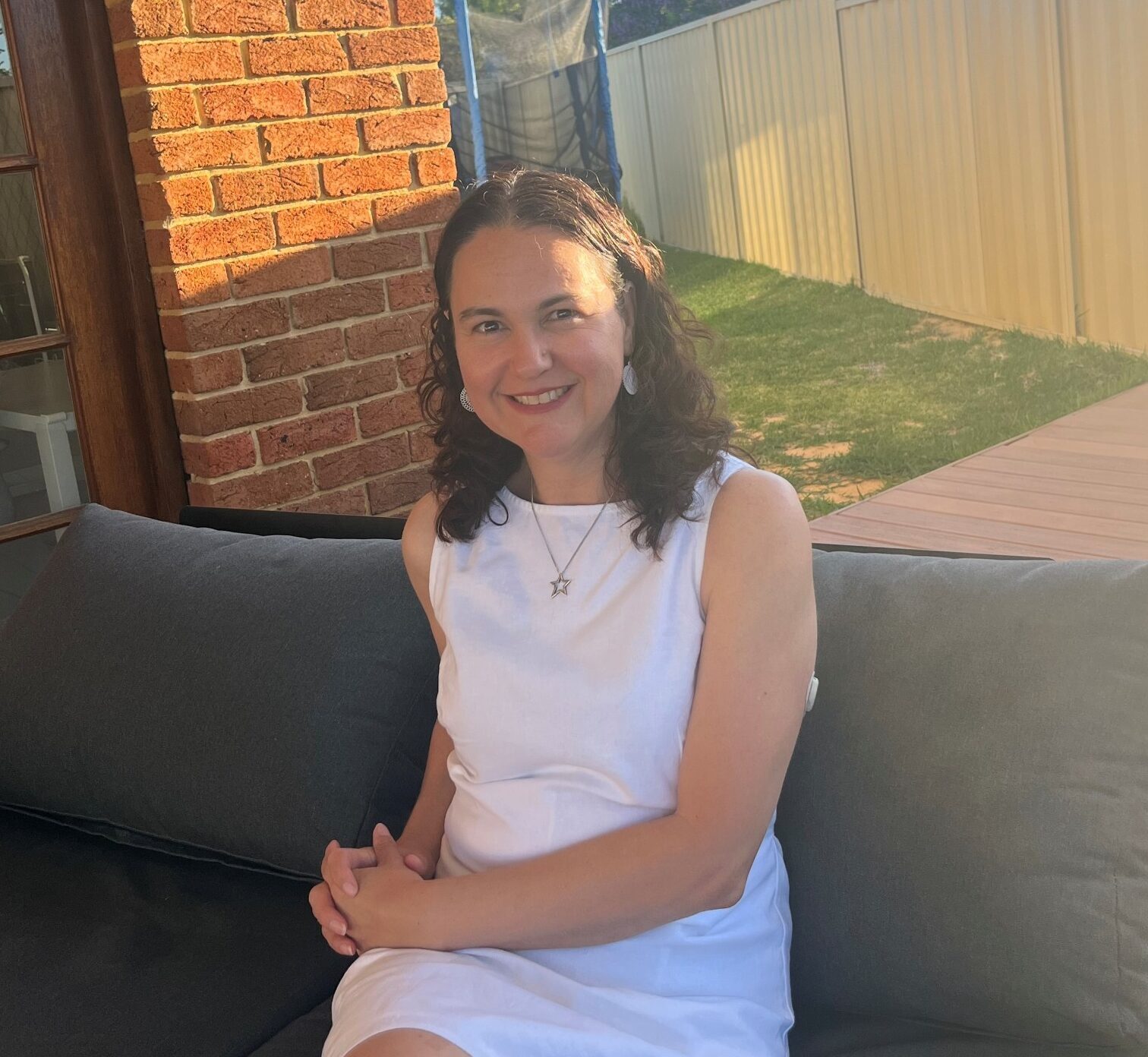
Many people who work at Diabetes WA have a deeply personal understanding of diabetes. Our team member, diabetes educator and midwife JULIE DAWSON, shares her lived experience and career journey.
“I always wanted to be a midwife – it’s the happy part of the hospital. When I started out, you needed to be a registered nurse first, and it was good to have that qualification as I have fallen back on nursing at times. I worked as a midwife at King Edward Memorial Hospital for 10 years and loved looking after women and their families from diverse ethnic backgrounds.
During my first pregnancy I was diagnosed with gestational diabetes (GDM), which was a shock as I had no risk factors. I self-managed my GDM with diet and exercise and had Ella in 2006. My follow-up oral glucose tolerance test (OGTT) was normal.
During my second pregnancy, my blood glucose levels were above target in the first trimester and became hard to manage. Despite being active and eating a healthy diet, I required insulin for the last six weeks to keep my glucose in target range. It was a very challenging pregnancy. Unfortunately, and unexpectedly at 36 weeks, our son Toby was born still. This was unexplained at the time.
Throughout this difficult time, I continued to test my BGL as I never felt well. My blood glucose levels remained high, and I lost my pregnancy weight rapidly. I had an OGTT and the results were well above target range. I had an urgent appointment with an endocrinologist and was diagnosed with type 1 diabetes within two months of losing my son.
As I was diagnosed out of a hospital setting, I was simply given an insulin pen, minimal education from the endocrinologist and no connection with a diabetes educator. Perhaps it was assumed that as I was medically educated and well, I would know what I was doing.
I navigated this challenge with the incredible support of my paramedic husband, along with family and friends, but I lost confidence socially and in my health, and resigned from work to look after my health and my daughter.
Two years later I fell pregnant with our third baby. This was a high-risk pregnancy, having both type 1 diabetes and previous still birth, and I had a diabetes educator and midwife input throughout. I used multiple daily injections of insulin and finger-pricked, checking my blood glucose levels at least 6-8 times a day. At 29 weeks I had threatened preterm labour and was diagnosed with severe cholestasis, a liver condition that causes intense itching, although I had no symptoms – again, extremely rare and unexplained. This was suggested as the cause for Toby being stillborn. Karina was born at 34 weeks because of the ongoing risk for her with my cholestasis, not from the type 1 diabetes. She was premature and spent 15 days in the NICU. Once she was home, she thrived and I successfully breastfed her, although it was challenging with many hypoglycaemia episodes.
My first interaction with a community diabetes educator was many years later at the Type 1 Family Centre. From here I learned to adjust my insulin with day and night shifts, split doses, manage different foods, and prevent the many hypos at night, usually following a busy day.
I returned to my passion of midwifery in 2013 at Murdoch SJOG. I loved it and was glad to be back. In 2018 I commenced self-funding a CGM, and it was approved for government subsidy in July 2022. This was life-changing in terms of being more affordable, able to safely manage the various shifts, travel, exercise and sleep knowing the safety around the hypo alarms. It gave me incredible freedom and confidence.
Covid-19 was challenging. I worked in full PPE with labouring women who were positive, which made it harder to check my CGM, so I had to rely on the alarms. I was also noticing an increase in women we were seeing with GDM. I decided to study to be a diabetes educator.
Through that course I connected with a diabetes educators who got me onto trialling the In-Pen with the Guardian CGM and insulin calculator. This prepared me well for the pump start.
I was encouraged by another colleague to trial the Omnipod DASH in September 2024. I’ve since upgraded to the Omnipod 5, a tubeless waterproof hybrid closed loop system. I can sleep through the night without hypoglycaemia episodes and put it into activity mode to exercise safely and manage daily activities such as gardening without hypoglycaemia stopping me. It’s been life changing.
In January of this year, I noticed my daughter Karina started going to the toilet more often, not putting on weight, drinking more water and saying she was hungry. I made her check her blood glucose, which was HI. Although she was not unwell, my husband and I took her to Perth Children’s Hospital where she was diagnosed with type 1 diabetes by the emergency consultant, who also had type 1. She started fingerpicking herself and I was able to give her first insulin injection. The nurses were thankful as we caught the signs early. We just got on with it as we knew we were lucky to avoid an ICU admission.
Karina had a very positive experience at Perth Children’s Hospital. The diabetes educators were incredible, letting her guide their education sessions based on what she understood already from watching me. She went home with the CGM, and we were grateful for the technology and alarms in the early weeks.
She didn’t want a pump at first but soon saw the benefits of my Omnipod DASH. We were happy to use our health insurance to help fund this, knowing the CGM was fully subsided for those with type 1 diabetes under 21 years.
She carried on with all her activities, including dance and sport, and went to camp independently thanks to her attitude and technology. She has seen me work shifts, travel, swim, drive and live well with type 1 diabetes, which I think helps.
As parents we had many sleepless nights, though the pump technology has brought more flexibility. She can now have sleepovers and go to parties, navigate foods independently and self-manage hypoglycaemia.
Working as a diabetes educator in a hospital can be quite confronting, whereas working at Diabetes WA is about helping people in the community to understand their diabetes, live well and avoid hospital admissions. There’s a real focus on preventative care and community-based education.
As a midwife I know the importance for women and their babies with gestational diabetes getting the support, diabetes self-management education and follow up with a diabetes educator through their pregnancy and into the postpartum period. We know GDM can lead to type 2 diabetes in the long term and presents its own risks in pregnancy, labour and birth for both the mother and baby. I believe that, although a challenging time, if women are given the information they need, they can help themselves to reduce the risks by following simple healthy lifestyle recommendations.
I continue to work as a midwife and am now working towards being a credentialled diabetes educator. I’m also learning about parenting a teenager with type 1 diabetes. I’ve always had to make a lot of decisions with my own health, but now it’s like I’ve had to develop another sense to keep checking in on where Karina’s glucose levels are at. You never really switch off.”
Do you have any questions about gestational diabetes?
The GDM Telehealth clinic is free to all pregnant women living in rural or remote WA who have recently been diagnosed with gestational diabetes and are looking for support.
We take referrals from obstetric services we regularly collaborate with, or alternatively, you can self-refer via our telehealth service by calling the Diabetes WA Helpline on 1300 001 880.
We also see women with gestational diabetes at our metro clinics for face-to-face appointments, and anyone living in Western Australia with questions about all types of diabetes can call our free Helpline on 1300 001 880.
If you’ve had gestational diabetes, you can also register for the free online Baby Steps program.
This story is from our summer issue of Diabetes Matters – download your free copy here