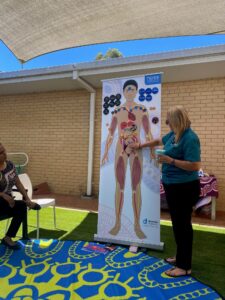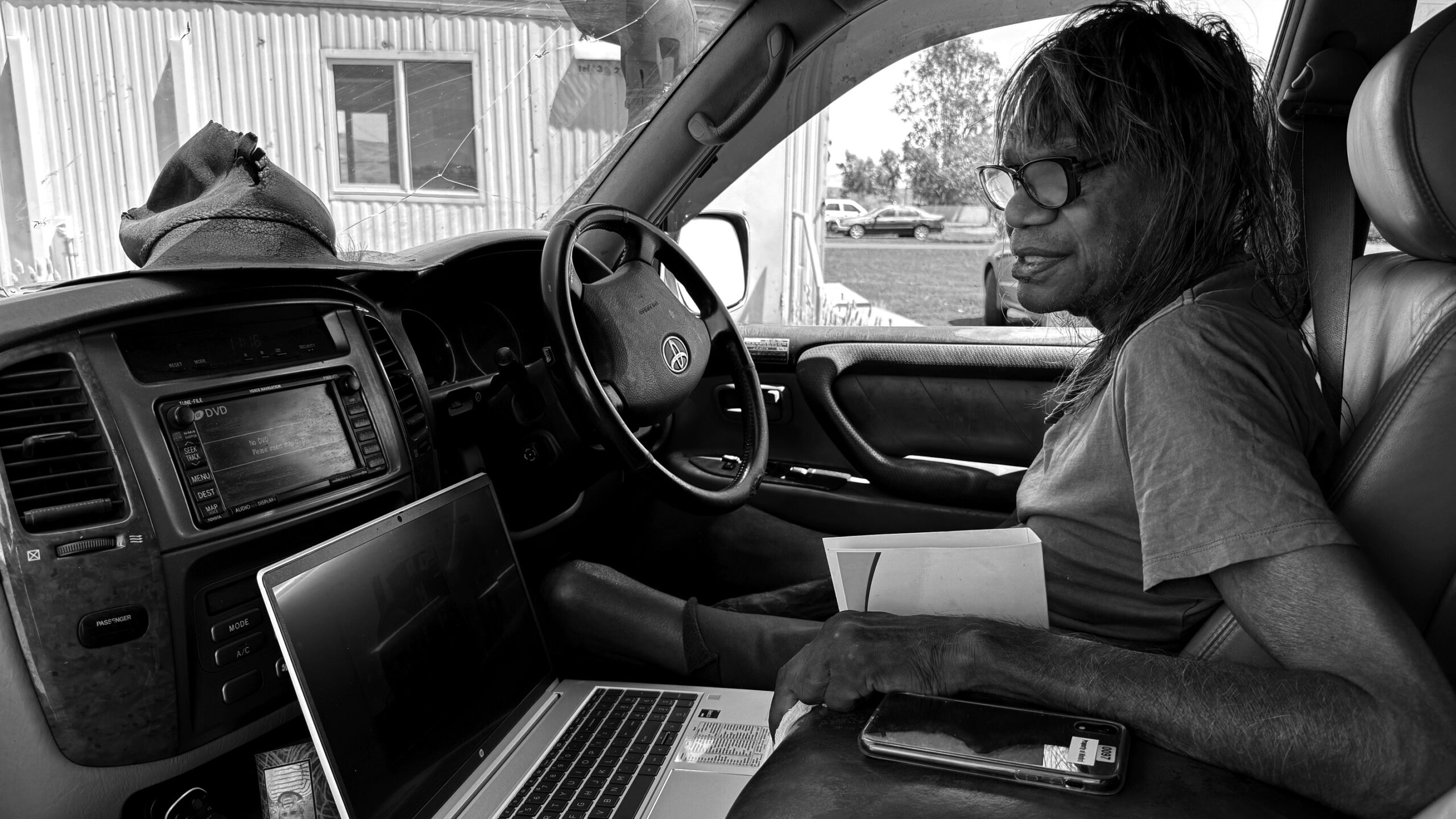

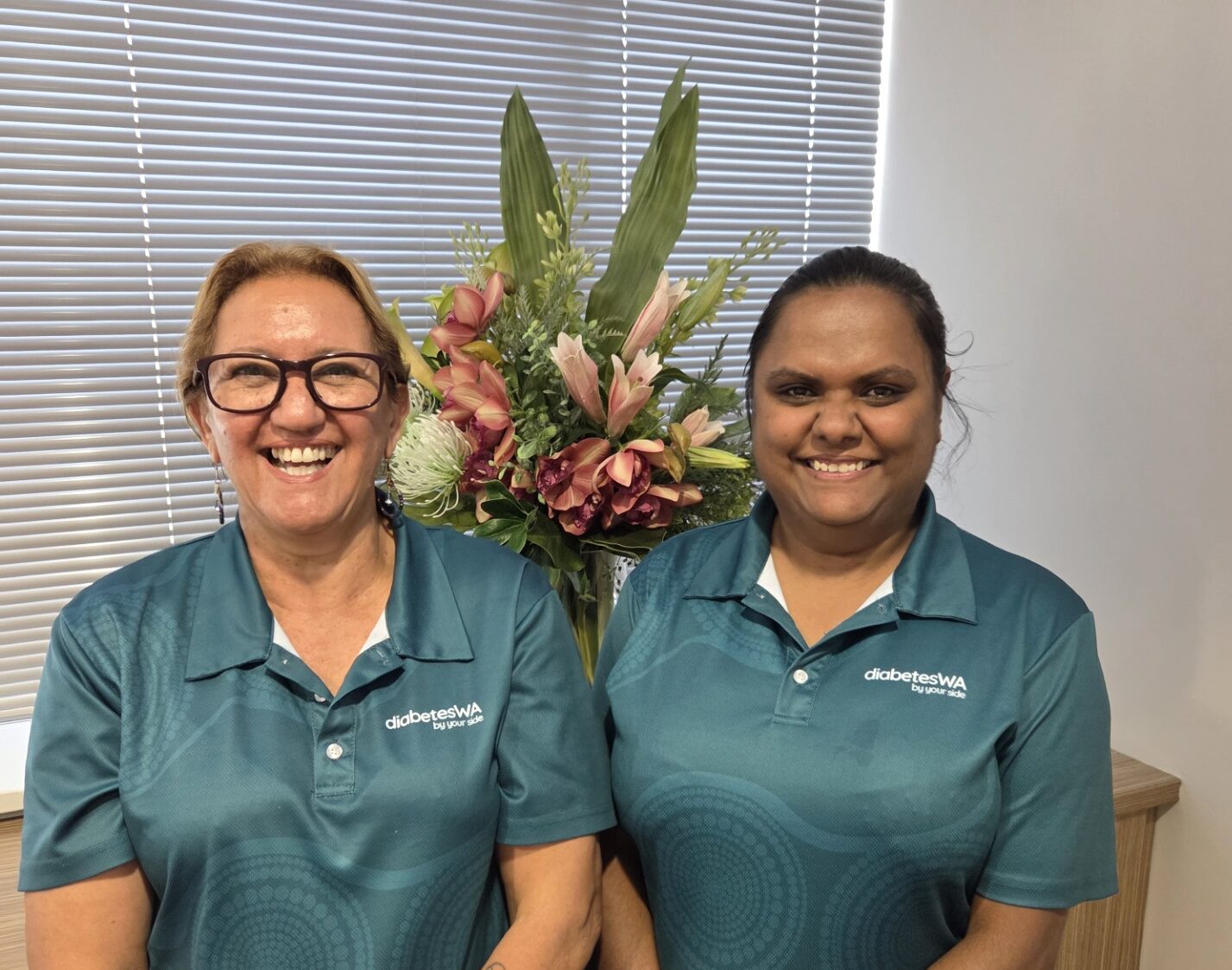
Our Aboriginal Health Team, Kathryn Huet and Sarah Kickett, visited Peel Health Campus last year to talk to staff about delivering Diabetes Yarning sessions. Here, Kathy reflects on the benefits of these sessions for both health professionals and community.
“Our Diabetes Yarning program is about getting together and having a yarn about diabetes. We talk about what diabetes is and help people come up with their own plan to manage it. Last year, we travelled down to Peel Health Campus to teach their allied health team how to deliver the program.
We always say that one of the good things about Diabetes Yarning is that it gets people talking about diabetes in a relaxed setting. If someone goes to a GP, for example, they may be told they have diabetes, be given medication and sent on their way.
But managing diabetes is about much more than taking medicine. And a lot of the management happens your day-to-day life, such as your food choices. Plus, in a doctor’s appointment, a person may not know what to ask, or they may not feel comfortable speaking up when it’s a busy clinic and they only have fifteen minutes of the doctor’s time.
There can also be stigma and shame about having diabetes, and people may feel shy about talking about their health issues. So, what we try to do is create a safe space for people to have a yarn and to help people understand that a diabetes diagnosis is not something to be ashamed of.
We cover eight topics, including how diabetes works in the body, how to reduce the risk of developing type 2 diabetes and strategies to manage diabetes. Each participant receives a booklet with information to take home, and a session typically takes one to two hours.
Training people to deliver Diabetes Yarning means they can offer the program to their own communities. This training is not only for Aboriginal health professionals. It’s for anyone in Western Australia who works with First Nations people and communities.
We hope that health professionals leave with a better understanding of type 1, type 2 and gestational diabetes and how to educate others. We also talk about prevention, food choices and so on, while acknowledging how hard it can be in areas with limited access to fresh food.
We always say it’s not just about delivering the information like you would in a clinic, for example. It’s about how you deliver it, and about being aware of your audience and checking in with them.
It’s also important to leave space for questions. People can be shy, but once one person asks a question someone else will put their hand up and then you have a good conversation going.
Training other health professionals gives me a sense of purpose, because I know that the information I share will ripple out and help the community. I feel like I’m doing something good, and I’m very passionate about it.
Right now, there are only two of us covering the whole of WA, but we are expanding and will soon have another Aboriginal Health Practitioner.
These things take time, you can’t just snap your fingers and it’s done, but we are looking forward to the year ahead. We stay in touch with all the people we meet, and we’d love to hear from health professionals who want to learn more. Ultimately, it’s about building a relationship with the community and taking it from there.
With diabetes on the rise across Australia, this is an important topic to understand. It’s a slow work in progress and can’t be rushed, but the more health professionals who have a good understanding of diabetes, the better.