
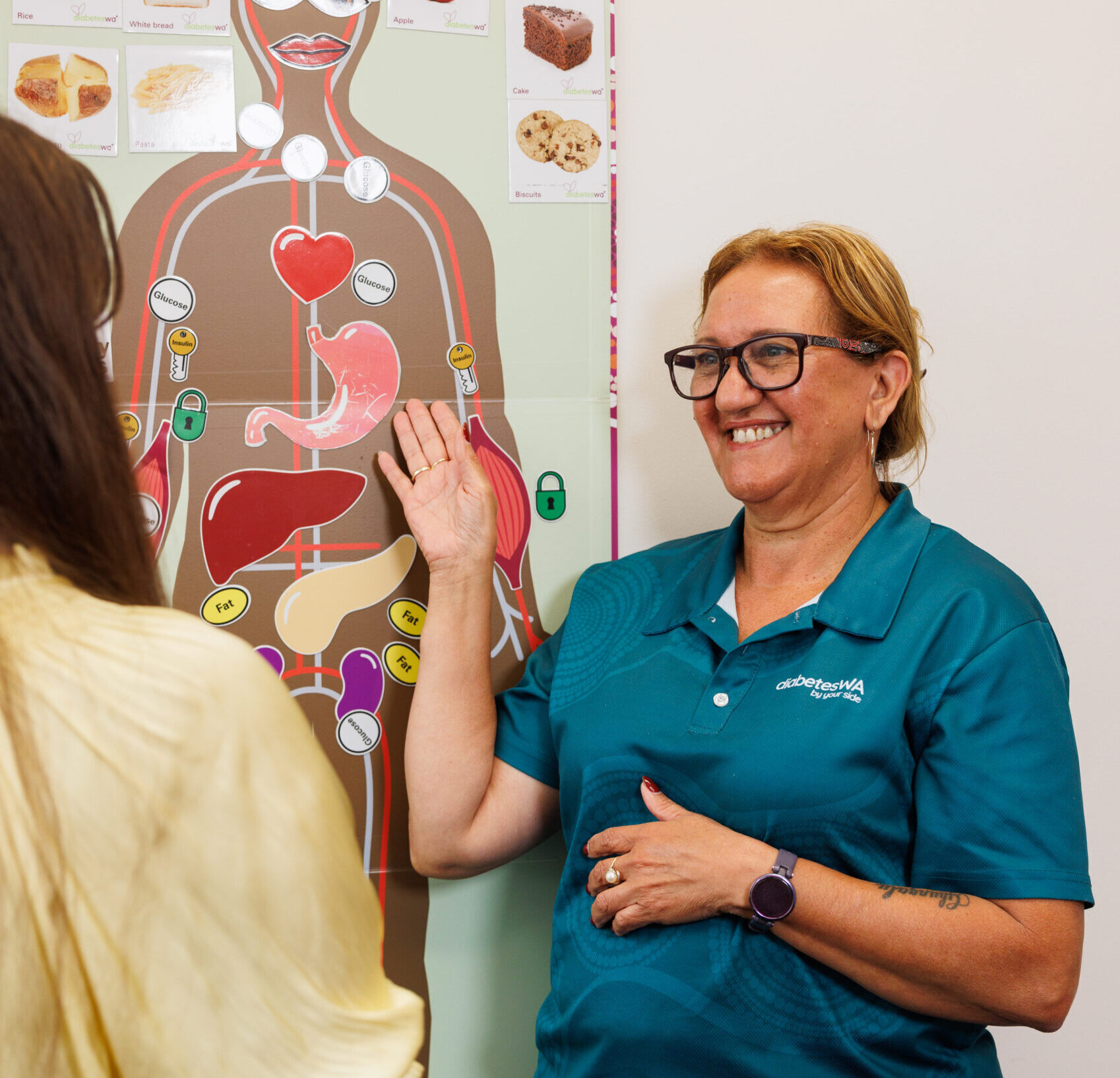
KATHRYN HUET on why slowing down, making space and respecting story are central to her work as a diabetes educator.
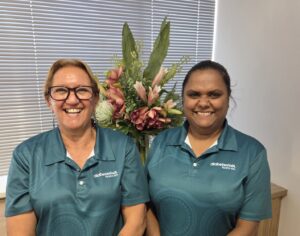
Here at Diabetes WA, our Aboriginal Health Team spends a lot of time out in community — yarning, listening and building knowledge together. We travel across the state and visit people in their own communities.
An important part of our work is promoting cultural safety in everything we do. This means slowing down, respecting story, understanding different worldviews, and making space for mob to feel seen and heard.
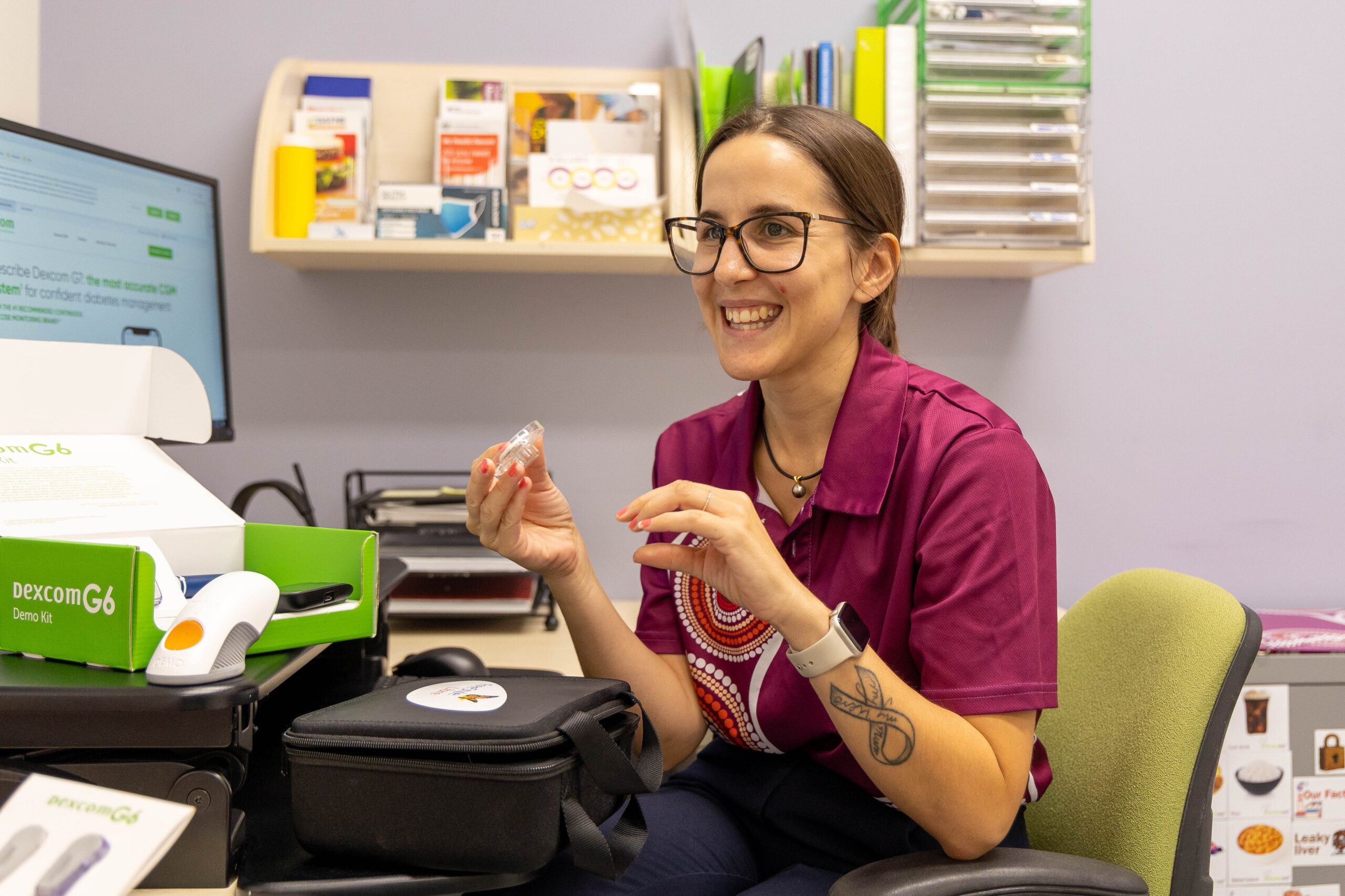
Our programs include diabetes education sessions, community health promotion, group yarning sessions and screening events.
People we talk to about diabetes tell us that they want clear information, given in a way that makes sense to them and fits in with their daily lives.
Many tell us that they feel overwhelmed or unsure of where to start, and they appreciate it when someone takes the time to sit, listen and explain things without judgement.
When it comes to reaching people, we go to them. We connect in places where people feel safe, like community centres, outdoors, around a cuppa, or wherever mob feel most comfortable.
We avoid the pressure of clinical or hospital environments when we can, because we know cultural safety and trust are key.
A lot of our work involves meeting people where they’re at and building long-term relationships. We focus on supporting local health workers, families, Elders and community leaders so diabetes knowledge stays in the community and not just with visiting staff.
When it comes to talking about touchy subjects, we take our time, we listen first, and we focus on strengths. We respect people’s lived experience and acknowledge the challenges they face.
We break information down gently and yarn in a way that keeps dignity at the centre of every conversation.
We also train community health professionals so they can deliver these programs to their own mob. Community-led education is powerful — people respond differently when the message comes from someone who knows their Country, their kinship and their lived realities.
It’s about making sure our workforce feels ready to support mob in ways that truly work for them, because health information is more meaningful when it comes from within community.
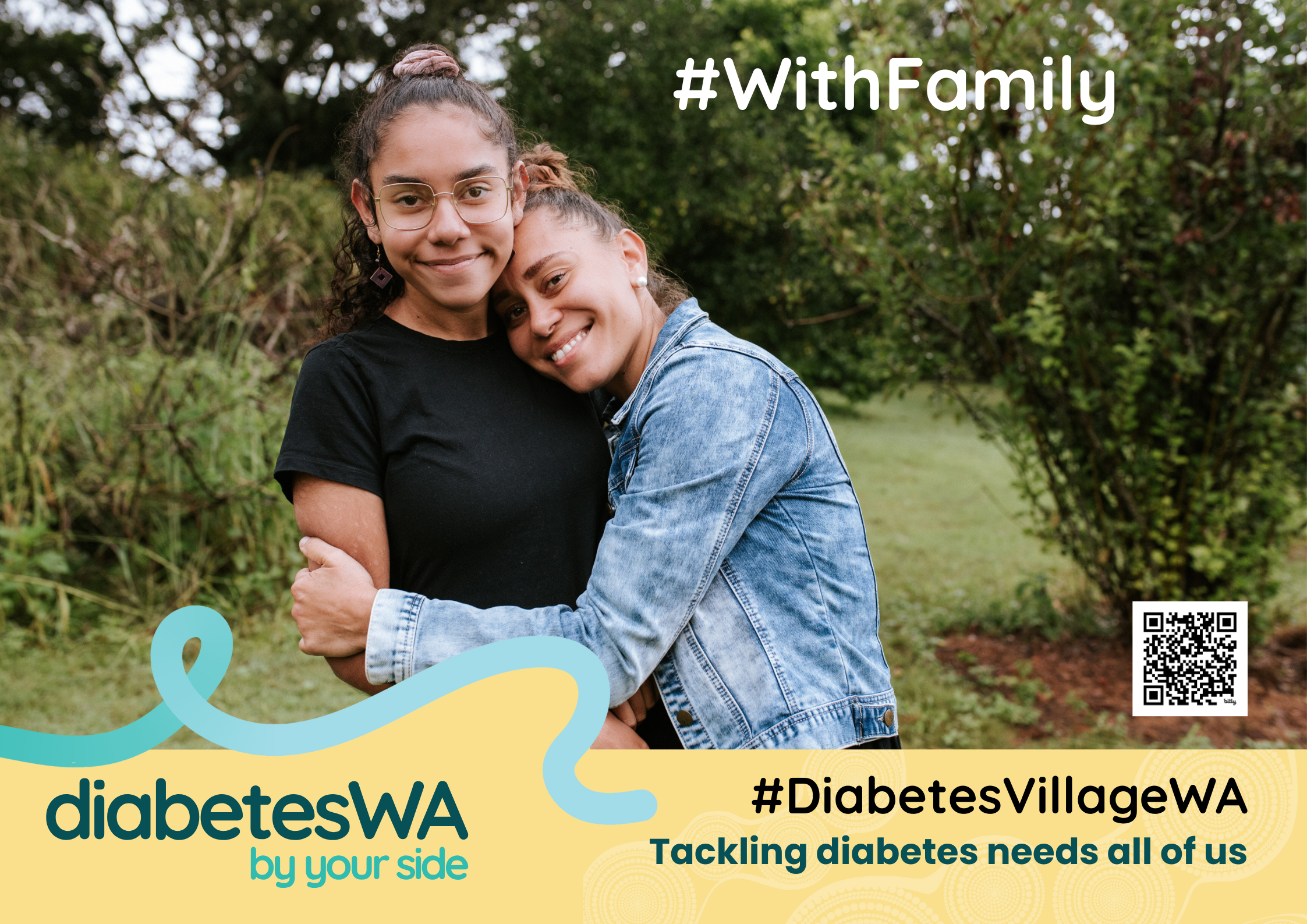
Some of the changes we’ve observed are people feeling more confident to ask questions, families walking together on their health journey, and communities supporting each other to make small but powerful changes.
One of my favourite wins was when we ran the DESY program out in the Ngaanyatjarra Lands. We were yarning about physical exercise after meals, and the whole group decided, right then and there, to go for a half-hour walk after lunch.
Seeing everyone get up, get moving, and support each other was deadly — a simple moment, but such a strong example of what can happen when community takes ownership of their health journey.
Here at Diabetes WA my role is to walk alongside Aboriginal people, families and community and to support them in understanding and managing diabetes in ways that feel safe, respectful and culturally meaningful.
I help yarn about prevention, early detection and living well with diabetes, and I support communities to build their own capacity to keep their mob strong. Everyone deserves access to diabetes information that is culturally safe, clear and empowering.
I do this work because I care deeply about the health and wellbeing of Aboriginal people, and I love seeing mob feel in control of their health.
Supporting people to take strong steps for themselves and their families is what keeps me passionate about this work every day. Every yarn, every group, every journey — it all matters. And I’m proud to be a part of it.
Would you like our Aboriginal Health Team to visit your community?
Or find out more about our resources and culturally safe education for Aboriginal communities? Visit our Aboriginal Health page to get in touch with our team.